music theory : classic jazz harmony
In this site there are free resources to learn music theory, harmony, composing, music analysis, improvisation and many other music topics.
Music theory is a field of study that involves an investigation of the many diverse elements of a music, including the development and methodology for analyzing, hearing, understanding, and composing music. While musicology may include any statement, belief, or conception of or about music, music theory is limited to discussions concerning synchronic (or diachronic) events of a specific composition and abstract music-theoretic issues.
Performers study music theory in order to be able to understand the relationships that a composer expects to be understood in the notation, and composers study music theory in order to be able to understand how to produce effects and to structure their own works. Composers may study music theory in order to guide their pre-compositional and compositional decisions. Broadly speaking, music theory in the Western tradition focuses on harmony and counterpoint, and then uses these to explain large scale structure and the creation of melody.
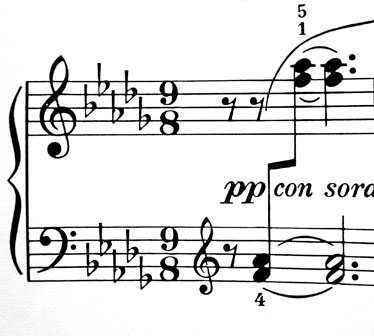
This section has been written by Catherine Schmidt-Jones, me and Wikipedia editors. It contains a lot of articles about basic music theory and classic harmony. Everyone can learn music theory and harmony.
Here are resources to learn jazz improvisation, jazz theory, pop composing. Music improvisation is my passion: I love Keith Jarrett, Bill Evans, Miles Davis and Chick Corea. Also Pat Metheny and Charlie Parker are my favorite jazz improvisers. Music harmony is fundamental to learn improvisation. Jazz and blues chords to play on your instrument, techniques to master jazz and blues improvisation, harmonic substitutions and rhythmic patterns to play swing.
How to compose pop songs. Rules to compose a melody and the sections of a song. Intro, verse, chorus, bridge and middle eight are the most important section of a song.
Exercises to develop your hearing. Perfect (or absolute) and relative pitch are two different ways to recognize music notes. Here I suggest you some drills, software and other resources to learn this skill.
In this section there are analysis of classic masterpieces and jazz solos to better understand the fundamental concepts of jazz theory