Why Lyricists and Composers Do Not Always Split a Song 50/50
A lyric can be the emotional heart of a song. It may contain the title, the story, the central image and the words that listeners remember. But a lyric on the page is not yet a completed song or a finished recording.
To become a release-ready track, those words may still need melody, harmony, rhythm, structure, arrangement, vocal production, musicians, recording, editing, mixing and mastering. That work can take considerable time, skill and financial investment. This is why an automatic 50/50 division is not always the right starting point when a lyricist approaches a composer or production team.
There is no universal rule that says a lyricist must receive less than half, or that every two-person collaboration must be split equally. The fair agreement depends on what each person is creating, funding and risking. The important thing is to discuss it honestly before production begins.

First, separate the song from the recording
People often use the word “song” to describe several different things. In practice, a completed release may contain separate rights and contributions:
- The lyric: the words written by the lyricist.
- The musical composition: the melody, harmony, rhythm and musical form created by the composer or songwriters.
- The master recording: the particular recorded performance produced in the studio.
- The performances: the work of the singers and musicians heard on that recording.
These should not be bundled together casually. Under UK Intellectual Property Office guidance, lyrics and music may remain distinct works created by different people. A sound recording is another copyright work, and performers may also have separate rights. A percentage of the composition does not automatically mean the same percentage of the master recording.
This distinction helps everyone. A lyricist can retain ownership of the original words while the parties separately agree how the newly composed music, finished song and master recording may be owned, licensed and exploited.
Why composers may hesitate at an automatic 50/50 split
Imagine a lyricist sends a completed page of words to a composer. The composer must then find the melody, chords, tempo, groove, key, form and emotional direction. The lyric may also need editing so that stresses fall naturally, sections match and the singer has room to breathe.
After composition comes production. Depending on the project, the composer or production team may need to:
- rewrite sections and shape the complete song structure;
- create an arrangement and instrumental parts;
- prepare guide tracks and session materials;
- book and direct vocalists and musicians;
- record several takes and layers;
- edit timing, tuning and performances;
- mix the track and complete the final master;
- manage files, revisions, contracts and delivery.
A lyric might take its writer an evening, several weeks or many years. Time alone does not decide its value. A brilliant chorus may be written quickly, while a weak line can take months. Even so, the composer and production team must consider the work still required and the costs they will carry.
From SongBay’s experience, many composers are reluctant to accept supplied lyrics when they are expected to surrender half of all future songwriting income before they have written a note. If the same composer can write their own words, fund their own recording and keep control of the resulting work, an automatic 50 per cent demand can make the collaboration unattractive.
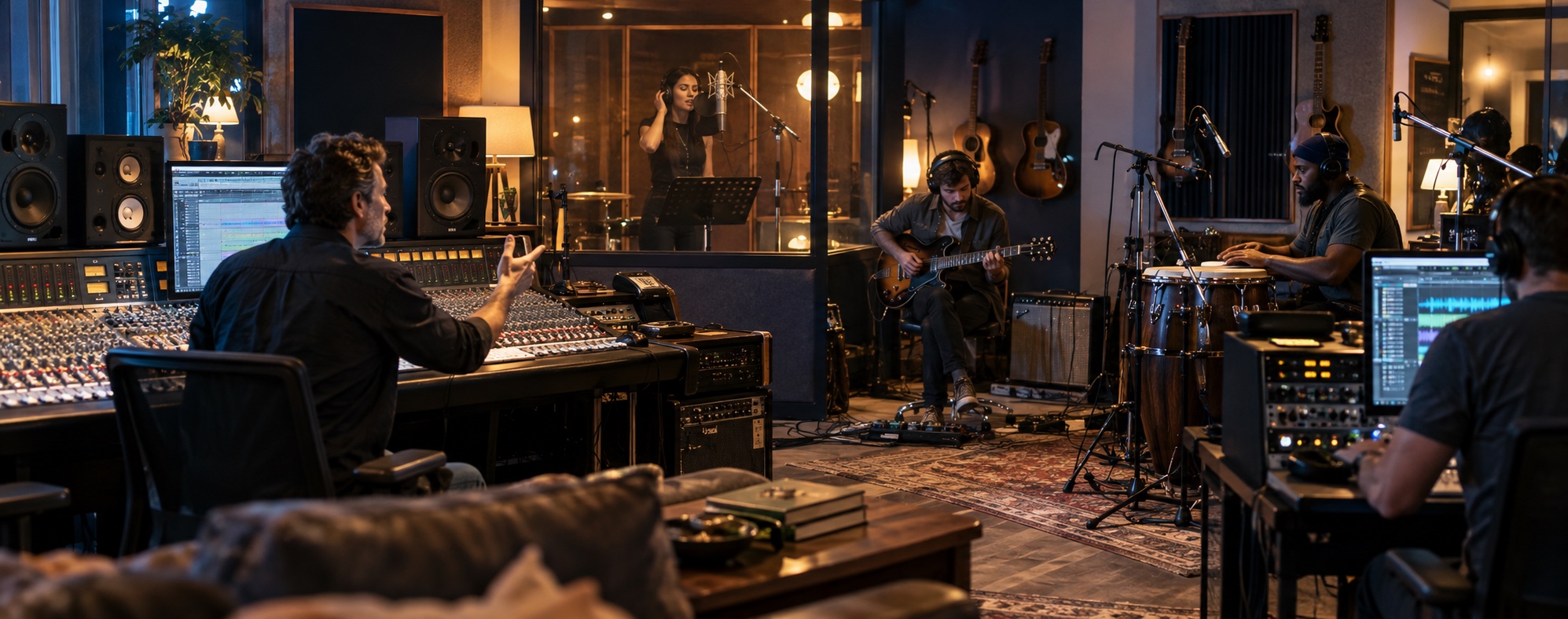
The investment behind a professional recording
Even a home-based composer may have invested tens of thousands of pounds in instruments, computers, microphones, monitoring, acoustic treatment, software and reliable backup systems. A professional room can cost considerably more. The equipment is only part of the story. It may take a lifetime of musical study, performance, production work and careful listening to develop the skills needed to use it well.
Then there are the people. As one current reference point, the Musicians’ Union and BPI standard non-classical recording-session fee for 2026 is £180 for a three-hour session. A production using several musicians, a lead vocalist, backing vocals, an engineer and additional studio time can accumulate costs quickly. Not every independent recording follows those exact rates, but they show why real professional work cannot be valued as though only a lyric sheet changed hands.
Production also carries risk. The composer may spend days or weeks on a track that never earns any money. Granting away a large share of possible future earnings can therefore feel like paying for the production twice: first through unpaid work and studio expenditure, then through a permanent reduction in royalties.
When can a 50/50 split be appropriate?
A 50/50 split can be entirely fair when two people genuinely co-write the song as equal creative partners. For example, the lyricist may develop words in the room while the composer shapes the melody, and both may change each other’s material until the song is inseparable from the collaboration.
It may also form part of a wider commercial agreement when the lyricist contributes substantially to production costs, helps develop the composition, brings valuable opportunities to the project or shares the financial risk. If the lyricist pays half of the agreed studio and production budget, an equal commercial arrangement may feel reasonable to both sides.
However, paying half of a recording bill does not automatically turn someone into the author of half the music. Authorship, publishing income, ownership of the master and recovery of production costs are separate questions. The agreement must say clearly what the payment buys and which percentage applies to which right.
Some collaborators choose equal shares simply because it supports a good long-term partnership. Others use different percentages based on contribution. Either approach can work when it is informed, voluntary and recorded in writing.
When a one-off payment may make more sense
Sometimes the clearest arrangement is a commission. The lyricist pays an agreed fee for composition and production, then receives the licence or rights set out in the service contract. The composer and performers are paid for their work rather than being asked to speculate on uncertain future royalties.
This can be especially useful when the lyric already exists and the customer wants a professional team to turn it into a completed track. It gives everyone a defined role, price, timetable and rights position.
A hybrid arrangement is also possible. The parties might agree a smaller upfront fee plus a royalty share, or a production fee that is recouped before income is divided. There is no single perfect formula. The right model is the one the contributors understand and accept before work begins.
Use a split sheet before recording starts
A friendly conversation is not enough when money and copyright are involved. Before the expensive work starts, write down:
- who wrote the lyrics;
- who wrote the melody and other musical elements;
- the agreed songwriting or publishing percentages;
- who will pay the production costs;
- who will own the finished master;
- what licence each party receives;
- how income and expenses will be handled;
- whether further approval is needed for release, licensing or alteration.
This need not begin as a frightening legal document. A clear split sheet and production agreement can prevent years of uncertainty. For important commercial releases, independent legal advice remains sensible.
Be cautious of impossibly cheap production offers
If somebody offers to compose, arrange, perform, record, mix and master a bespoke song for £100 or £200, ask careful questions. Who is singing? Which instruments are genuinely being performed? Is the work original? Is generative AI being used? Who owns the result? Are commercial rights included? Will you receive a properly mixed and mastered file?
AI can be useful when it is disclosed and used responsibly, but a low-cost generation should not be presented as though a full team of professional musicians created a bespoke studio production. The price should match the actual process and the customer should know what they are buying.
SongBay’s £495 Lyric-to-Song service
SongBay’s Lyric-to-Song service turns a customer’s lyric into an original, professionally produced song. The work can include composition, arrangement, vocals, instrumentation, recording, editing, mixing and mastering, according to the service brief and terms.
The subsidised price is £495 for eligible SongBay Ultimate members. The standard price for other customers is £895. Eligibility requirements and the current estimated production start are shown on the service pages and Client Request Form.
The £495 member price is deliberately generous. It should not be mistaken for the normal market cost of commissioning all of the people, facilities and skills involved separately. It is a supported route designed to help serious lyricists hear their words become a complete song.
Most importantly, it replaces vague expectations with a defined professional service. The lyricist knows what is being commissioned, the production team knows what it has agreed to create, and the rights are explained before the work begins.
Fair collaboration begins with understanding
A lyricist should value their words. A composer should value the music they create. Performers, engineers and producers should also have their contributions recognised. Fairness does not always mean dividing every right in half. It means understanding the different layers of the work and agreeing terms that reflect the real creative and financial contribution of everyone involved.
Discuss the split before the session. Separate the composition from the master. Put the agreement in writing. Then everyone can concentrate on the part that matters most: making the strongest possible song.
Explore SongBay’s Lyric-to-Song service or review the full service terms.